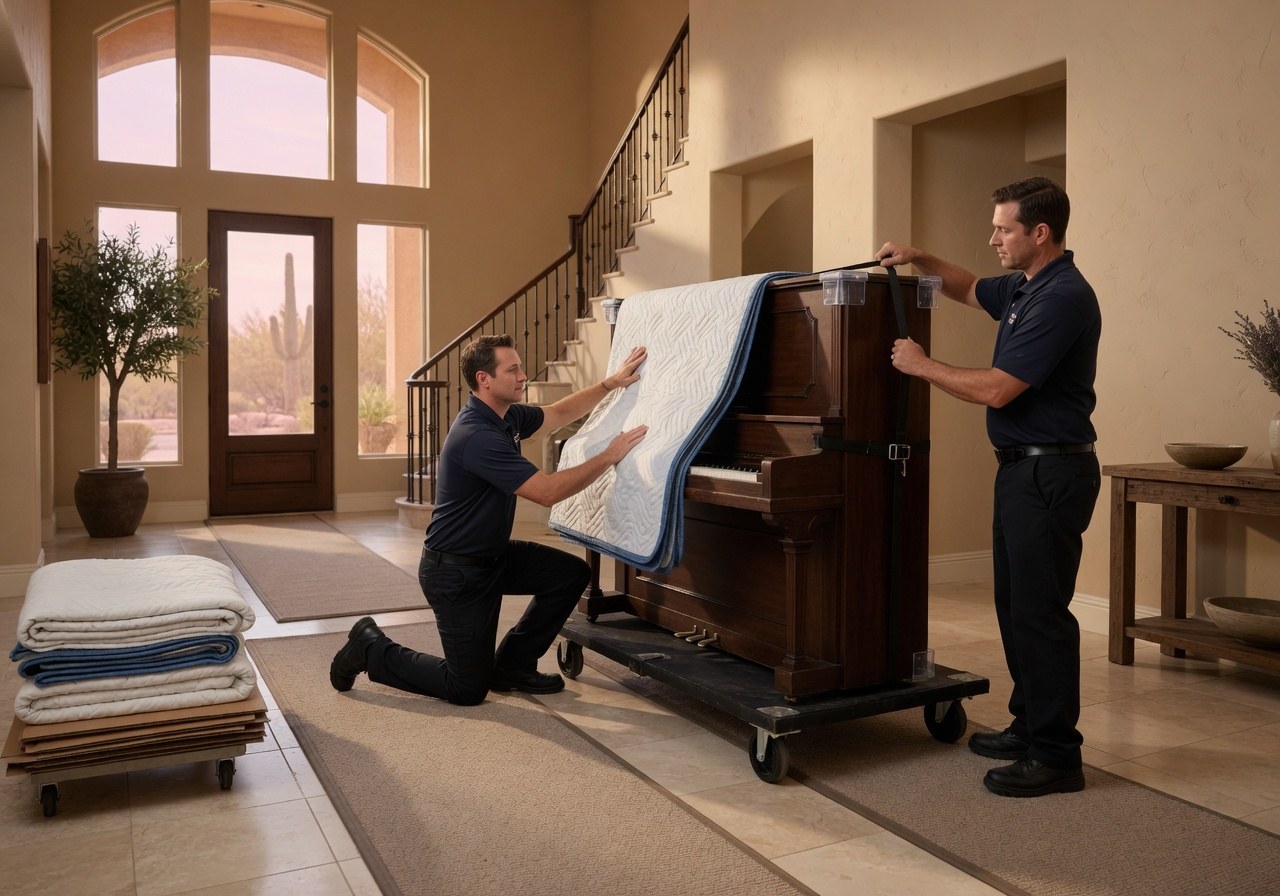
Player & Digital Piano Moving without guesswork.
The job is not just getting the piano into a truck. It is identifying the instrument, planning the route, protecting the finish and property, controlling the move, and placing the piano correctly at the destination.
Player, digital, hybrid, and self-playing pianos combine a piano cabinet and action with mechanical or electronic systems. Some are lighter than acoustic instruments; others are heavier because of player mechanisms, speakers, control units, or integrated hardware.
- Traditional player and reproducing pianos
- Digital, console digital, hybrid, silent-system, and self-playing pianos
- Protection for cabinets, pedals, power components, control units, and attached systems
Player, digital, and hybrid pianos we move
- Traditional player and reproducing pianos: Older pneumatic or mechanical systems can add weight and delicate internal components to an upright or grand cabinet.
- Modern self-playing pianos: Integrated playback and control systems require model identification, power disconnection, cable control, and careful handling.
- Digital console pianos: Cabinets, pedal assemblies, stands, speakers, and power components should be secured and moved as the manufacturer allows.
- Hybrid and silent-system pianos: Acoustic actions paired with sensors, electronics, sound systems, or control units need both piano-moving and electronics awareness.
Field notes before the move
Send the make and model plate, full front and side photos, and close photos of attached control units, pedal assemblies, speakers, cables, or player hardware. Keep manuals and loose accessories together, but do not dismantle integrated components unless the manufacturer or mover directs it.
How the move is planned
- Confirm the make, model, cabinet style, and whether the system is player, digital, hybrid, silent, or self-playing
- Power down the instrument and identify removable cables, control units, accessories, pedal assemblies, or manufacturer transport requirements
- Plan the route around cabinet dimensions, actual weight, stairs, thresholds, turns, and final outlet or system placement
- Protect and transport the cabinet and components, then place the instrument without reconnecting or forcing unfamiliar systems
The label “digital” does not automatically mean light, and the label “player piano” does not describe one standard mechanism. Model details and photos keep the crew from making bad assumptions about weight, removable parts, or sensitive systems.
What we need before quoting
Share clear piano photos, make and model when available, pickup and delivery cities, stairs, elevators, tight turns, door and threshold concerns, distance from door to truck, preferred timing, and final placement. Include parking, gate, loading-zone, and access-window details for apartments, schools, churches, studios, venues, and gated communities.
Areas served
Gilbert, Chandler, Mesa, Queen Creek, Scottsdale, Tempe, Apache Junction, San Tan Valley, Paradise Valley, Fountain Hills, and nearby East Valley communities.