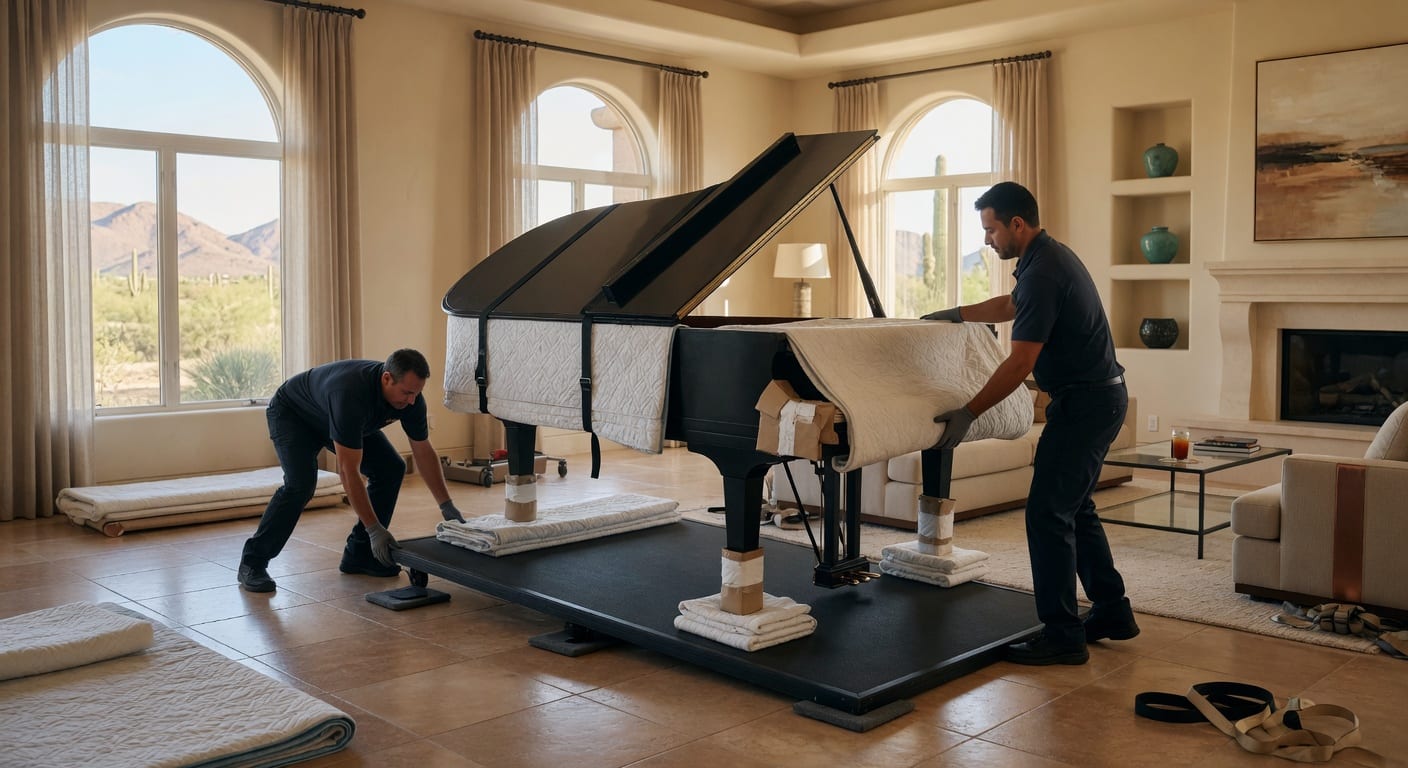
Grand Piano Moving without guesswork.
The job is not just “get it into the truck.” It’s planning the route, protecting the finish, protecting the property, controlling the lift, and placing the piano where it belongs at the other end.
Grand and baby grand piano moving is the least forgiving category because the instrument usually needs partial disassembly, controlled board work, careful padding, and a clean reassembly plan at the destination.
- Baby grand, parlor grand, semi-concert, and grand pianos
- Leg, pedal lyre, lid, and music rack protection
- Boarding, padding, strapping, and careful reassembly
Field notes before the move
For a grand or baby grand, photos of the piano and both routes matter. The crew needs to see leg clearance, the lid side, the stair or threshold situation, and the final room before deciding how much disassembly and protection the job needs.
How the move is planned
- Confirm piano size, access, stairs, turns, and final placement before scheduling
- Protect the lid, legs, pedal lyre, music rack, finish, floors, walls, and thresholds
- Use piano-specific moving equipment instead of treating the instrument like ordinary furniture
- Reassemble and place the piano carefully so the room is usable when the crew leaves
The biggest risk with grand pianos is not just weight. It is the awkward shape, exposed finish, removable parts, balance points, and how quickly a small mistake can become a flooring, wall, pedal, leg, or finish problem. A clean grand piano move is deliberate from the first measurement to the last placement.
What we need before quoting
Share the piano type, pickup and delivery cities, stairs, elevators, tight turns, distance from door to truck, and timing. Photos help. Surprises are expensive; planning is cheaper. If the piano is going into a school, church, studio, venue, apartment, or gated community, include parking, elevator, loading-zone, and access-window details too.
Areas served
Gilbert, Chandler, Mesa, Queen Creek, Scottsdale, Tempe, Apache Junction, San Tan Valley, Paradise Valley, Fountain Hills, and nearby East Valley communities.