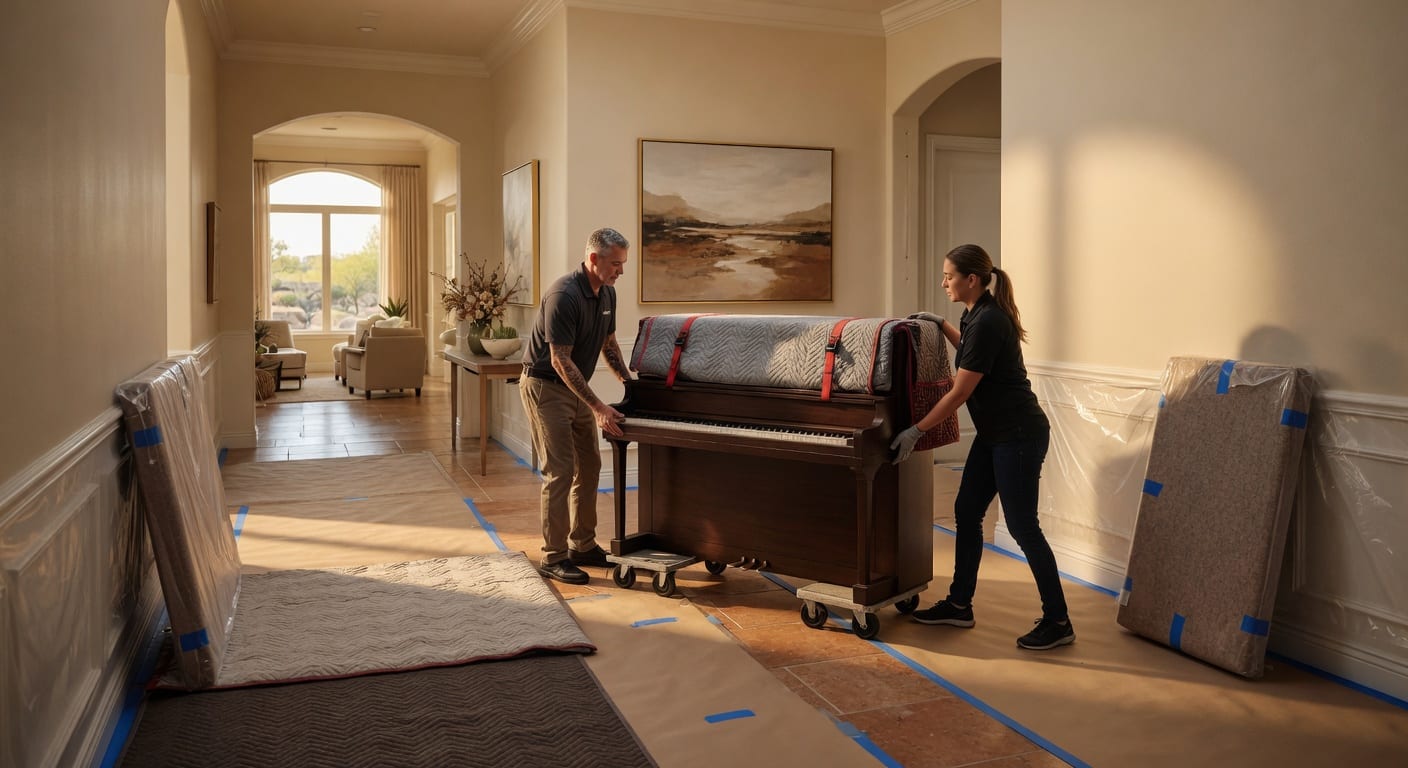
Upright Piano Moving without guesswork.
The job is not just “get it into the truck.” It’s planning the route, protecting the finish, protecting the property, controlling the lift, and placing the piano where it belongs at the other end.
Upright, console, studio, and spinet pianos look simpler than grands, but they are still heavy, top-sensitive, awkward around stairs, and easy to damage when a crew relies on brute force.
- Upright, console, studio, spinet, and vertical pianos
- Floor, door, wall, and instrument protection
- Smart routing for stairs, thresholds, and tight spaces
Field notes before the move
Upright moves are usually won or lost at the awkward parts of the route: the garage step, the first hallway turn, the stair landing, the doorway lip, or the last swing into the room. Send pictures of those spots, not just the piano.
How the move is planned
- Identify the exact upright style and approximate size
- Plan stair angles, tight halls, thresholds, and door swings before lifting
- Protect flooring, corners, walls, pedals, keys, and cabinet finish
- Control balance through the whole route instead of dragging or tipping carelessly
Most upright piano issues happen in tight spaces: a turn at the bottom of a stairway, a raised threshold, a narrow hallway, or a final room with delicate floors. The right plan keeps the piano stable and protects the house at the same time.
What we need before quoting
Share the piano type, pickup and delivery cities, stairs, elevators, tight turns, distance from door to truck, and timing. Photos help. Surprises are expensive; planning is cheaper. If the piano is going into a school, church, studio, venue, apartment, or gated community, include parking, elevator, loading-zone, and access-window details too.
Areas served
Gilbert, Chandler, Mesa, Queen Creek, Scottsdale, Tempe, Apache Junction, San Tan Valley, Paradise Valley, Fountain Hills, and nearby East Valley communities.